




Split Level Home Additions: Solutions for Charlotte’s Classic Homes
Quick answer: Split level homes in Charlotte respond well to thoughtful home additions and second story expansions. The right path, going up with a pop-top, going out with a rear bump-out, or going over an attached garage, depends on the lot, the existing structure, and how your family lives. ReVision Design + Build designs additions that feel original from the curb and live like they were planned that way from day one.
Split level homes have a special place in Charlotte’s residential story. Built mostly in the 1960s and 1970s across neighborhoods like Beverly Woods, Windsor Park, Starmount, Sedgefield, and Governors Square, these homes offered something the ranches before them did not: zones. A formal living room above the family room, a primary suite a half flight above the kitchen, storage tucked under the entry hall. The architecture worked beautifully for a generation, and it still has plenty to offer today.
The catch is that the families living in them have changed. Open kitchens, larger primary suites, dedicated home offices, and ground floor flexibility have become expectations rather than upgrades. That is where thoughtful home additions and second story expansions enter the picture, especially when the goal is to stay in the neighborhood you already love. For the full landscape across every addition type, our broader guide to home additions in Charlotte is the place to start; this article zooms in on what makes split levels different.
Why Split Level Homes in Charlotte Deserve a Tailored Approach
Split levels are not a single style. The Queen City has at least three distinct flavors: the split foyer (where the front door lands you between half flights up and down), the side split (where the wings step in a row), and the back split (where the upper level sits behind the main floor rather than above it). Each one reacts differently to expansion. A pop-top that works on a side split may not work on a split foyer because the foyer’s structural posts and short stair runs change how loads transfer.
Charlotte’s mature trees, established setbacks, and tight lot dimensions in these older neighborhoods also limit how far you can push out. That is part of why home additions and second story expansions have become the most popular path for owners who want to stay put. Going up keeps the yard, preserves the curb appeal, and adds the most useful square footage per foot of footprint.
Three Common Paths for Home Additions and Second Story Expansions
There is no single right answer for a split level. The path depends on the lot, the existing structure, and how your family wants to live. Three approaches show up repeatedly in the work we do for Charlotte homeowners.
Going up: a full or partial second story
The most common upgrade for a split foyer is a full second story, sometimes called a pop-top. It adds a primary suite, two or three secondary bedrooms, and a full bath without expanding the foundation. A partial pop-top, sometimes called a third level addition on a side split, lets you place a private retreat directly above the existing primary level rather than spanning the whole roof.
Going out: rear and side bump-outs
A rear bump-out works well when the lower or main level needs a bigger kitchen, a family room expansion, or a screened porch that the home never had. Side bump-outs are useful when the existing primary suite needs square footage for a walk-in closet, a true ensuite, or both. Both approaches preserve the original roofline and can be a smart fit on wider lots.
Going over: above the garage or a low wing
If your split level has an attached garage or a single story service wing, building over it can add a bonus room, a home office, or a guest suite without altering the front of the home. This path tends to integrate the most cleanly with the existing roofline because the addition borrows the same eave line as the original house.
The Real Design Challenge: Connecting the Levels
Adding square footage is the easy part. The harder, more rewarding part is connecting the new space to the old in a way that feels right. Split levels live by their stairs. Short runs of four, six, or eight risers carry you between half levels. When you add a full second story, those runs have to extend, and they need to do it without crowding the foyer or stealing daylight from the half landing window.
Our Design Team treats the stair as a centerpiece, not an afterthought. We study sightlines from the front door, the natural light coming through the existing windows, and how a thicker handrail or a deeper tread changes the way the room reads. We also think about how the new framing meets the original roof, where mechanical chases need to run, and how to keep ceiling heights comfortable on every level. Done well, the addition feels like it was always part of the home. Done poorly, it feels like a hat sitting on top of a house.
A Split Level Opened Up: Inside a Charlotte Project
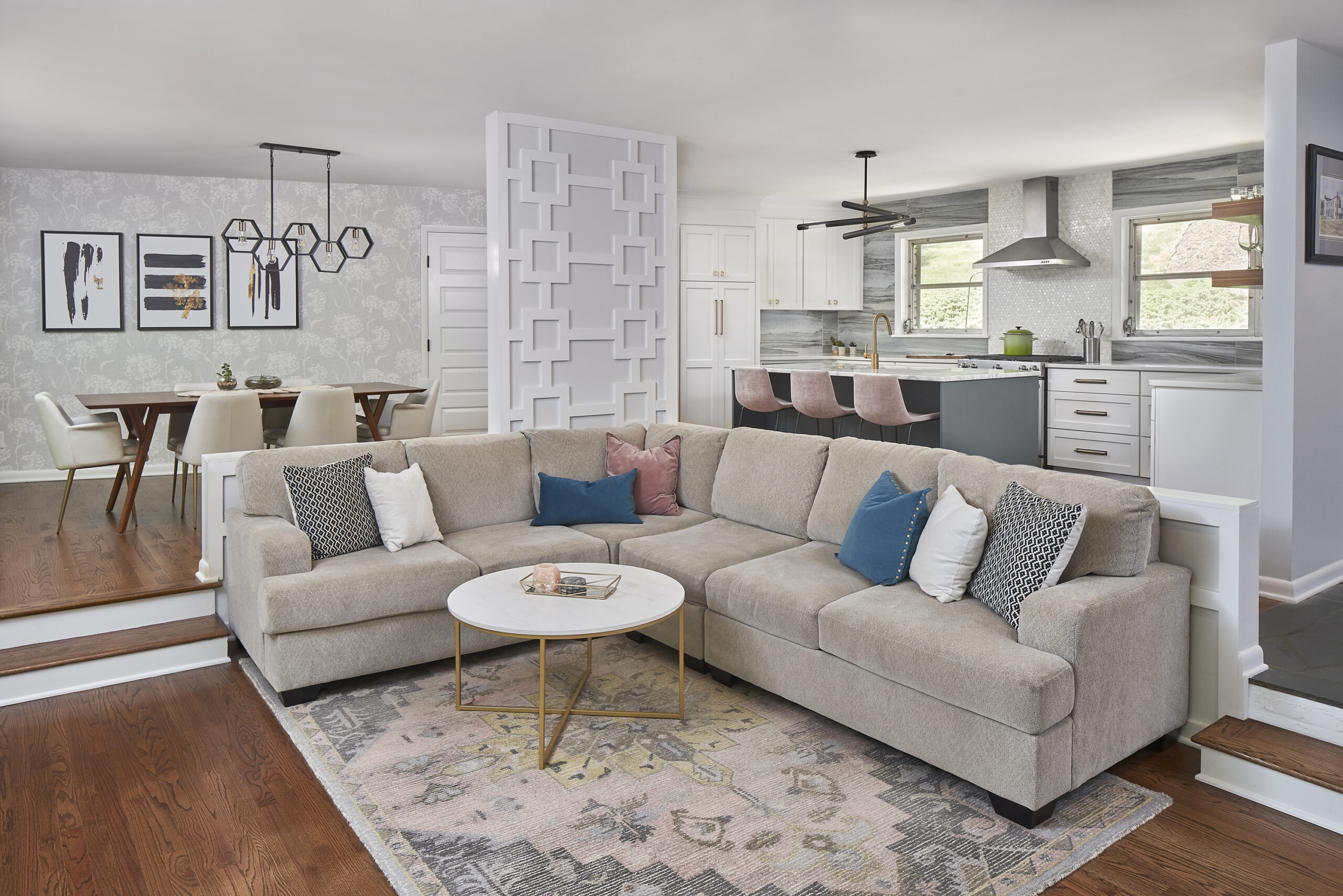
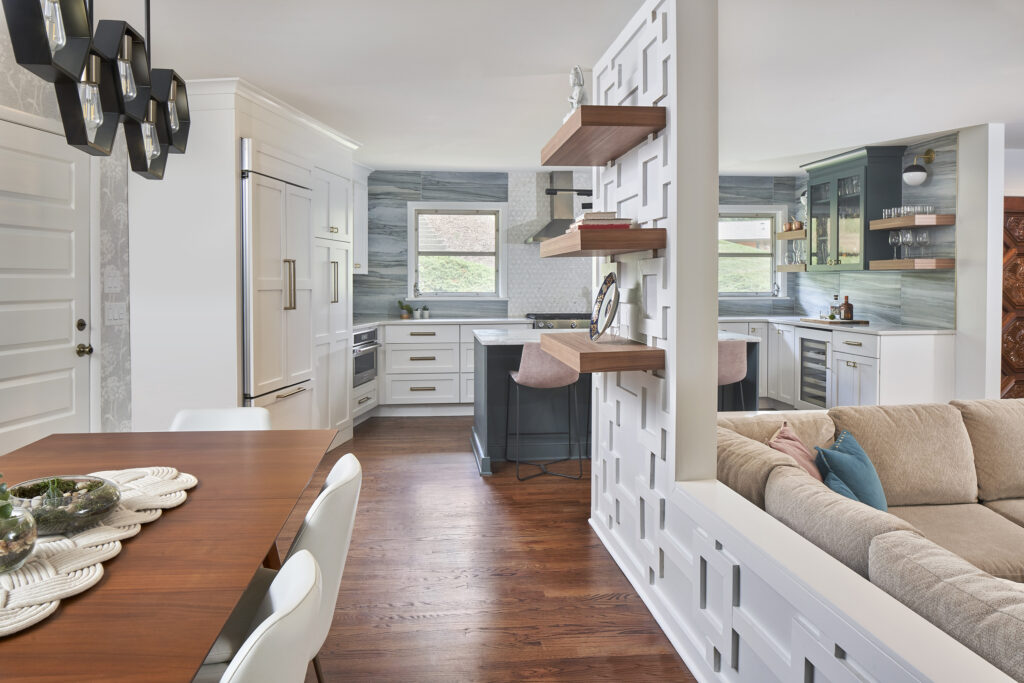
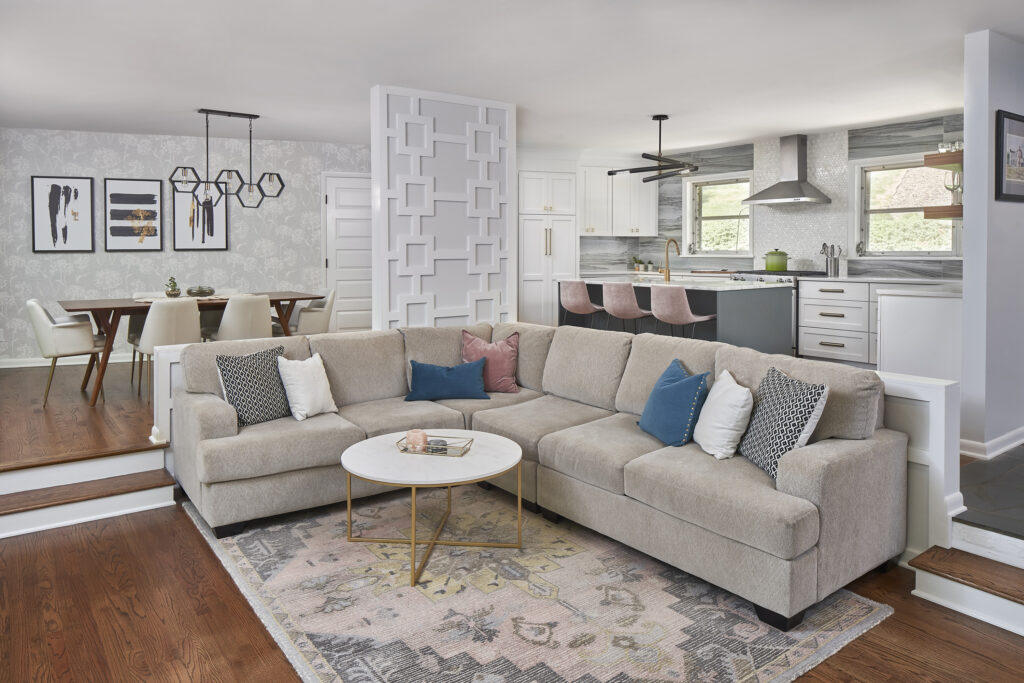
For a real example of what opening up a split level looks like, walk through this Charlotte split level transformation. When a young couple bought a 1959 split level, they inherited exactly the compartmentalized main floor described above: a kitchen, a sunken living room, and a dining room each boxed off by walls, anchored by a tiny, inoperable original wall oven. With their first child on the way, they reworked the level they live on most rather than leave the neighborhood.
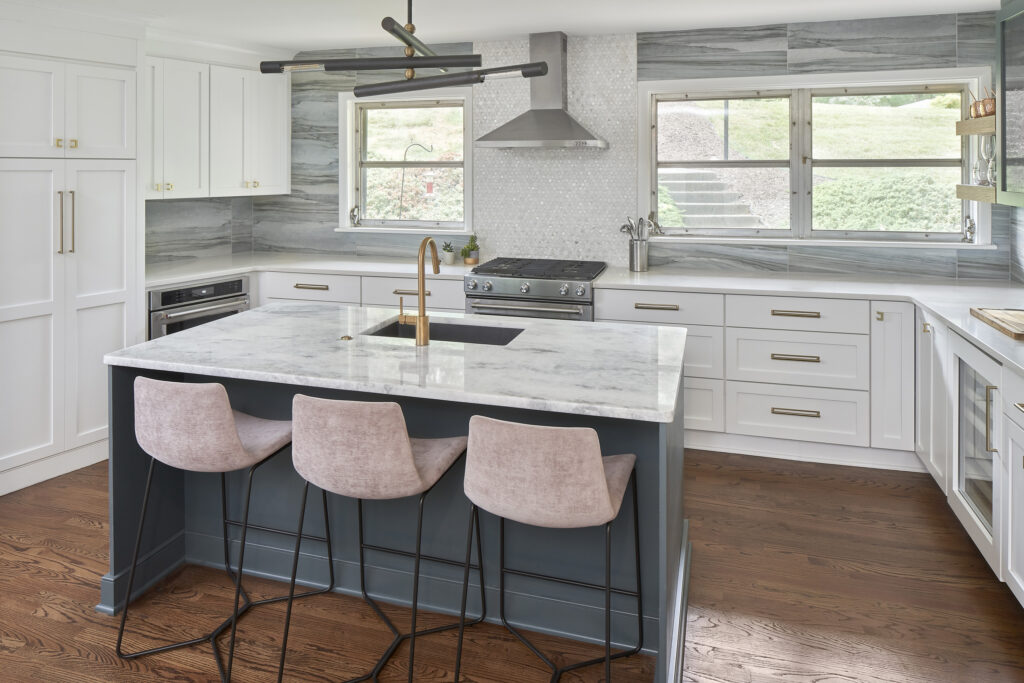
The walls separating the three spaces came down, but not entirely. Because the living room sat lower than the rooms around it, the team cut the walls to half walls and sized them to the couple’s large sectional, turning a structural reality into a built-in look. A patchwork of kitchen tile and living-room carpet gave way to site-finished hardwoods that read as one continuous floor across the split levels, while the original slate foyer stayed in place to keep the entry feeling like its own arrival zone. The home’s asymmetrical mid-century windows and original exterior stone were honored rather than fought, with custom cabinet modifications and floating shelves working around them. Removing the old peninsula doubled the working kitchen and let casual seating move to a new central island.
The result is a main level that lives open and modern for a growing family while keeping the character that makes a split level worth saving. It is the same connect-the-levels discipline an addition demands, applied to the floor plan itself.
Client: “We are extremely pleased with our recent split level kitchen renovation by ReVision. Their imaginative design ideas blended well with our vision to create a unique, functional space. The team was top notch and exceeded our expectations throughout the entire process. Their attention to detail and constant communication was greatly appreciated and showcased their professionalism. We highly recommend ReVision to anyone looking for a major home renovation.” – Tim R., Charlotte, NC
Note: this project is a main level remodel rather than an addition, but it shows the connect-the-levels thinking that every split level expansion relies on, which is why it earns a place in this guide.
What Shapes the Investment in a Split Level Addition
The factors that shape a split level addition are the same six that shape any Charlotte addition: scope, square footage, layout changes, material selections, fixtures and technology, and site conditions. Rather than repeat them here, our home additions guide breaks each one down in detail. The variable that weighs heaviest on a split level is structural reinforcement. Because going up adds load to an older foundation, almost every second story expansion starts with a structural engineer’s review, and older split level foundations sometimes need underpinning, additional footings, or steel connections at the main level walls. We talk through all of this with you before design begins, so the investment range is grounded in your real home, not a generic estimate.
Permits, Setbacks, and the Mecklenburg County Process
Like every meaningful addition in Charlotte, a split level expansion requires permits from the City of Charlotte and inspections through Mecklenburg County’s Code Enforcement office, with separate permits for building, electrical, mechanical, and plumbing work. Our home additions guide walks through that process step by step. What is specific to split levels is how the Charlotte Unified Development Ordinance treats height and lot coverage. Because so many of these homes sit on tight, mature lots, the rules on height limits and setbacks often decide whether going up or going out is even possible, and the buildable envelope on a Beverly Woods lot can look very different from a comparable lot in Plaza Midwood. Our preconstruction team handles the permit coordination, the structural stamps, and the inspection schedule so you are not chasing paperwork while trying to live in your home.
Why Design-Build Wins for Complex Additions
Split level additions ask three disciplines to agree from day one: the designer, the structural engineer, and the builder. When those roles live on separate teams, every roofline transition and stair relocation becomes a negotiation across companies. Design-build keeps them on one team, so the hard problems get solved on paper instead of in the field. We explain why this model matters for every project in our home additions guide; for a split level, it is the difference between an addition that runs and one that stalls. It all starts at our Design Studio on South Tryon Street, where 3D concepts and finish selections come together, and the investment range is set, before construction crews arrive.
2026 Trends in Home Additions and Second Story Expansions
The 2026 trends shaping additions, main floor primary suites, spa-style baths, conditioned sunrooms, smart-home rough-in, and sustainable material selections, apply to split levels too, and we cover them in depth in our home additions guide. On a split level specifically, the trend we watch most closely is roofline integration: a second story designed to look original rather than tacked on is what separates a thoughtful expansion from a hat sitting on top of a house.
How to Choose a Remodeler for a Split Level Project
A split level addition is a more complex project than a single room remodel. Three questions help separate firms that can deliver from firms that struggle once the surprises start. Our home additions guide covers what to look for in any Charlotte addition contractor; these are the split-level-specific tells.
- Have you completed second story expansions on split level homes in Charlotte? Ask to walk through a finished one if possible. Roofline transitions and stair relocations are where the craftsmanship shows.
- Who manages the structural engineering and permitting? In a true design-build firm, those handoffs happen inside one team. In a bid model, they happen between three companies and the homeowner often becomes the messenger.
- How do you communicate during construction? Daily logs, weekly walkthroughs, and a clear point of contact matter more than the lowest bid. Living through an addition is easier when you know what is happening next.
Frequently Asked Questions
| Question | Answer |
| Can every split level home support a second story addition? | Not everyone, but most can with the right reinforcement. A structural engineer evaluates the existing foundation, framing, and load paths before any design work moves forward. If your foundation cannot carry the load as-is, underpinning or additional footings can almost always close the gap. |
| Will my addition look like it was always part of the home? | That is the standard our team works to achieve. We carefully match rooflines, exterior materials, window styles, and interior trim profiles so the new space reads as original from the curb and from inside. |
| Can a split foyer be opened up at the same time as the addition? | Yes, and many of our clients use the addition as an opportunity to address the entry experience, relocate the stairs, or remove a load-bearing wall between the kitchen and family room. The Charlotte project featured above is a good example of that open-up work on its own. |
| Do I have to move out during a second story expansion? | Some clients stay; some prefer to find temporary housing once the roof is opened. We talk through the construction sequence with you during preconstruction so you can make the call that fits your family. |
| Will the existing home keep up with the new addition energy-wise? | Almost always, the existing home benefits from the project. We typically rebalance HVAC, add insulation in older walls and attics, and right-size electrical service so the comfort is consistent throughout the entire house. |
Ready to Reimagine Your Split Level?
If your split level has more potential than your current floor plan reveals, let us help you see it. A conversation with our team starts in your home, where we walk through what is working, what is not, and what could be. From there, the Design Studio at 2923 South Tryon Street is where the vision begins to take shape.
Call (704) 759-3920 or visit revisioncharlotte.com/contact-us to start a conversation about home additions and second story expansions designed for your home.