X
best remodeling company in Charlotte

Shower and Tub Wall Panel Options Explained

June 12, 2026 - Bathrooms

Quick answer: Shower and tub wall panels are large, water-resistant sheets that cover shower and tub walls with few or no seams. The main options are acrylic, PVC, laminate, solid surface, and large-format porcelain. Panels install faster than tile, have little or no grout to maintain, and create a clean, continuous surface, while tile offers more design variety.

If you are remodeling a bathroom, one of the first surface decisions you will face is what goes on the walls around your shower and tub. For decades the default answer was tile. Today, wall panels have become a serious contender, and for good reason. They go up faster, resist water beautifully, and give you a sleek, low-maintenance finish that fits the way people actually want to live.

At ReVision Design + Build, our in-house team of designers and craftsmen help Charlotte-area homeowners weigh these choices every day. This guide explains the main shower and tub wall panel options, how they compare to tile, what shapes your decision, and how the choice fits into a thoughtful remodel. We will skip the dollar figures here and focus on what each option actually does for your home.

What Are Shower and Tub Wall Panels?

Wall panels are large sheets, sometimes a single piece per wall, designed to enclose the wet area of a shower or tub. Instead of dozens or hundreds of individual tiles set in mortar with grout lines between them, a panel system covers the same area with a handful of pieces and minimal seams.

That difference matters more than it might sound. Grout is the part of a tiled shower that demands the most upkeep and is most likely to stain, crack, or harbor mildew over time. By reducing or eliminating grout lines, panels remove the single biggest maintenance headache in a wet area while delivering a smooth, modern look.

Panels are a strong fit if you want a clean contemporary aesthetic, a surface that wipes down in minutes, and a faster path through construction. They are worth a closer look if a busy household, an aging-in-place plan, or simple low-maintenance living is high on your priority list.

Shower and Tub Wall Panel Options

Shower and Tub Wall Panel Options: Main Materials Compared

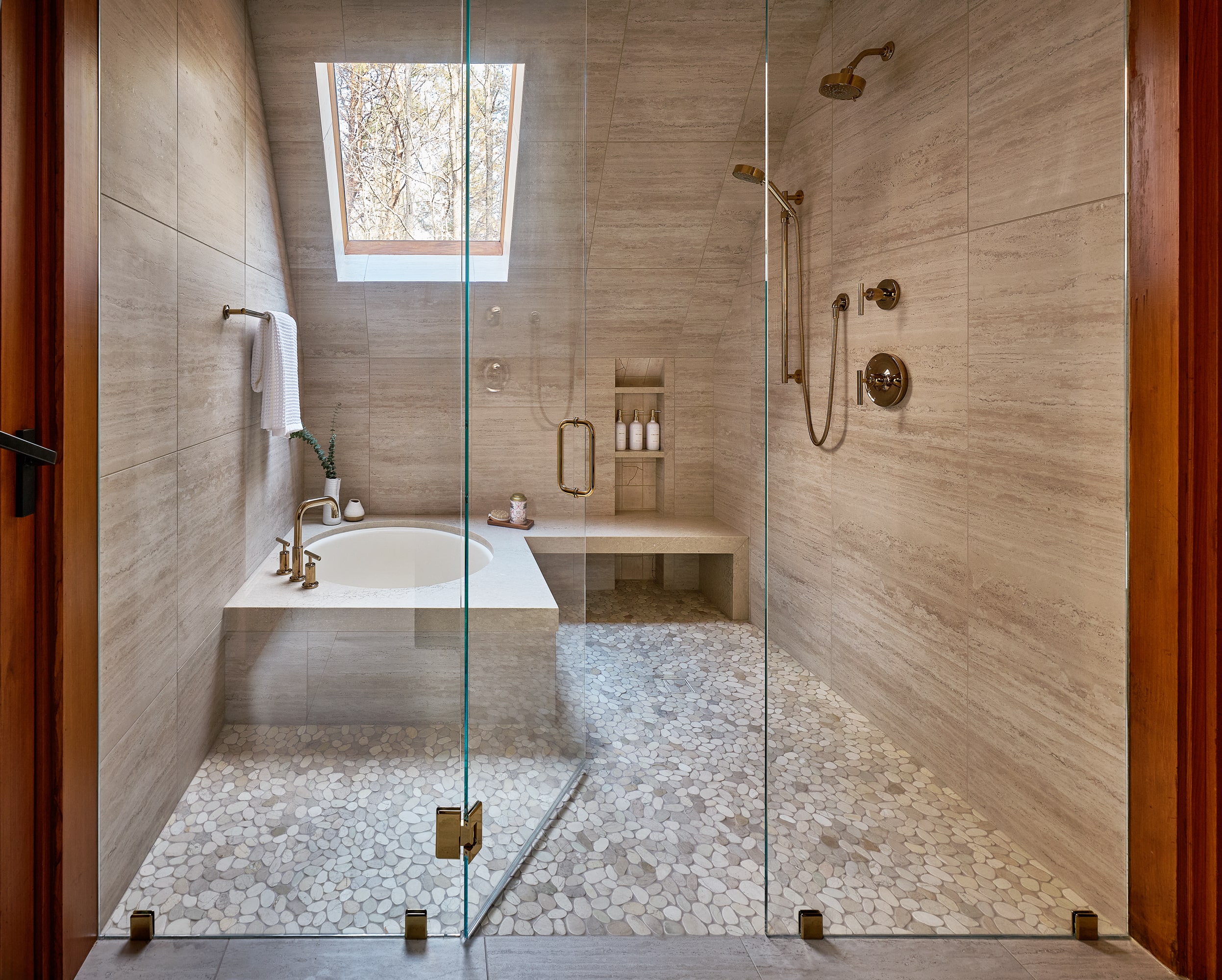
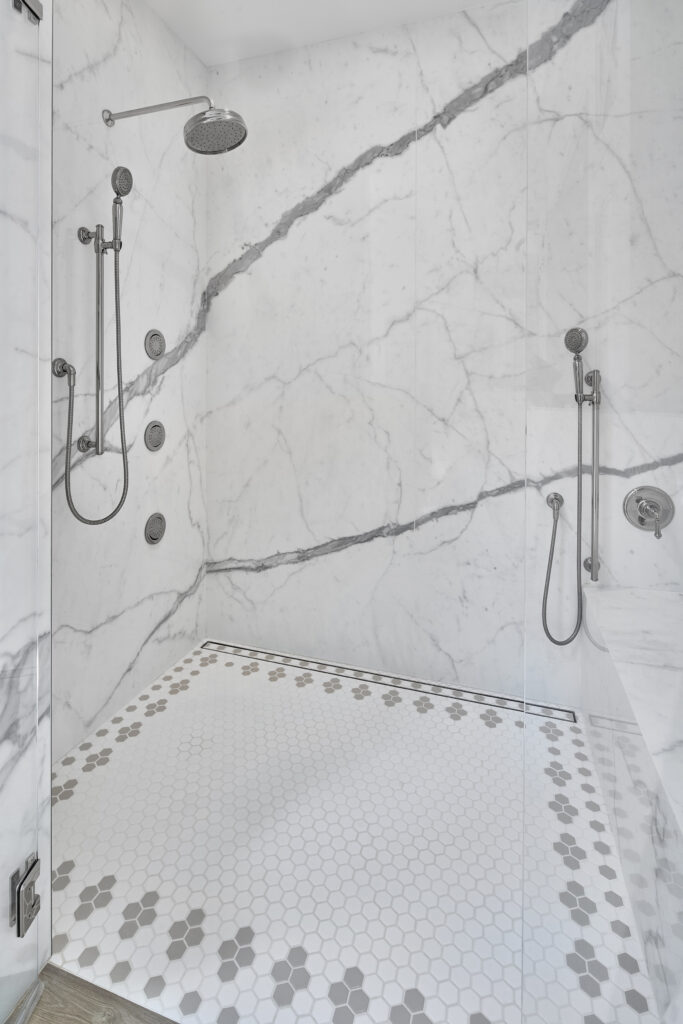
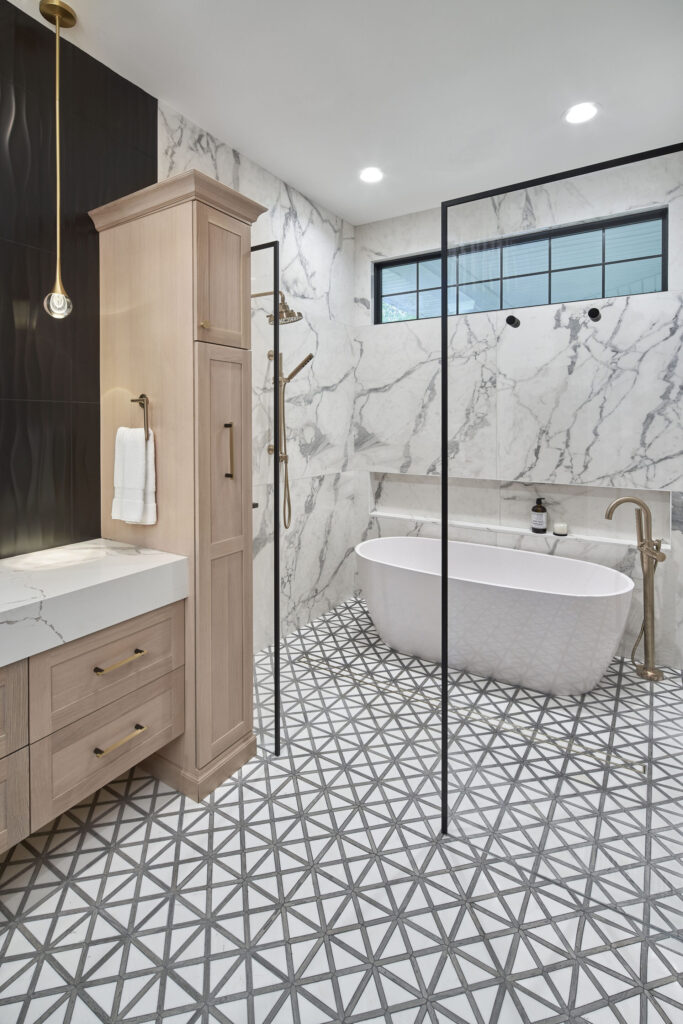
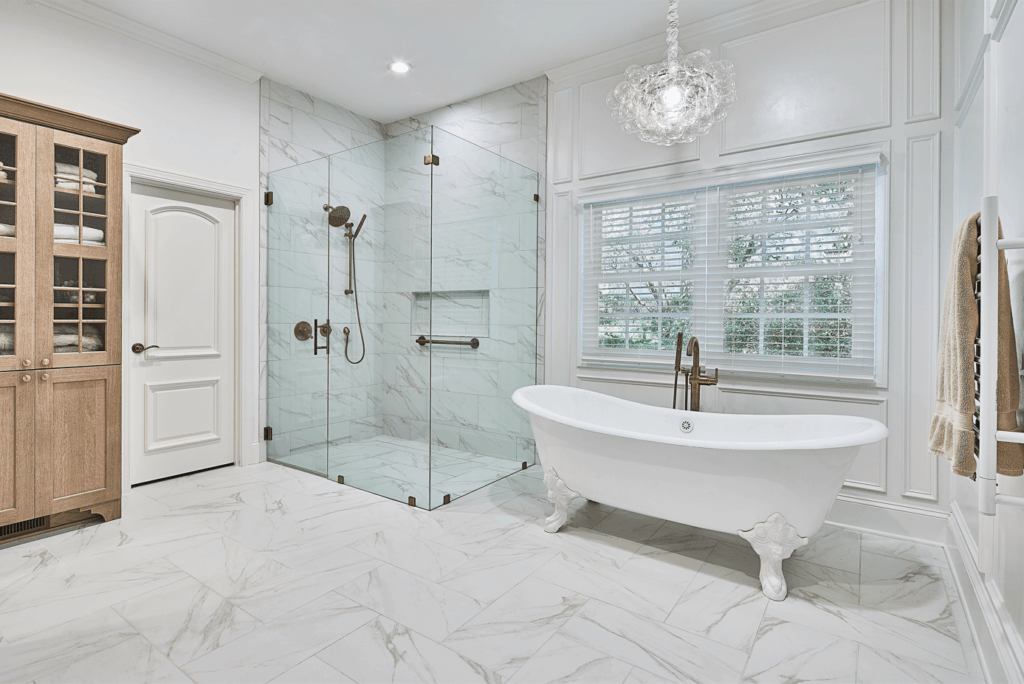
Large-format porcelain slabs bring the beauty of natural stone and the durability of porcelain to a panel-style installation. A few oversized slabs can cover a full shower wall with dramatically fewer grout joints than traditional tile. Porcelain is exceptionally hard, water-resistant, and available in convincing marble, concrete, and stone looks porcelain that mimics natural materials which makes it a favorite for luxury, design-forward remodels.

Acrylic

Acrylic panels offer a balanced mix of looks and performance. They come in many colors and patterns, usually carry a glossy finish that reads high-end, and resist moisture well. Unlike older fiberglass products, quality white acrylic will not yellow over time. Acrylic is a popular choice for homeowners who want a bright, seamless, easy-care surround.

Solid Surface

Solid surface panels deliver a seamless, stone-like appearance and a non-porous surface that resists bacteria and staining. Because the color runs through the material, minor scratches and scuffs can often be repaired rather than replaced. This is an excellent option for a refined, spa-like bathroom where a continuous matte or satin finish is the goal.

Large-Format Porcelain

Large-format porcelain slabs bring the beauty of natural stone and the durability of porcelain to a panel-style installation. A few oversized slabs can cover a full shower wall with dramatically fewer grout joints than traditional tile. Porcelain is exceptionally hard, water-resistant, and available in convincing marble, concrete, and stone looks, which makes it a favorite for luxury, design-forward remodels.

Laminate (High-Pressure Laminate)

Laminate panels offer a huge range of finishes, including wood, marble, and stone effects, with a sealed surface that handles moisture well. They are lightweight and adaptable, giving you a custom look without the weight of stone. Quality matters here, so it is worth choosing products and installers known for durable, properly sealed systems.

PVC and Composite

PVC and composite panels are durable, naturally water-resistant, and inherently mold-resistant, which suits wet areas well. They come in a wide range of designs, including realistic stone and tile effects. They are lightweight and forgiving to install, making them a practical option for many bathroom layouts.

Material Look Maintenance Best for
Acrylic Glossy, bright, many colors Very low, will not yellow Clean modern surrounds
Solid surface Seamless, stone-like Low, repairable surface Refined, spa-like baths
Large-format porcelain Natural stone and marble looks Low, very hard surface Luxury, design-forward remodels
Laminate (HPL) Wide range, wood and stone Low when properly sealed Custom looks, lighter weight
PVC / composite Stone and tile effects Very low, mold-resistant Practical, versatile layouts

Shower Wall Panels vs. Tile: Which Is Right for You?

This is the question most homeowners are really asking. Both panels and tile can create a beautiful, lasting bathroom, so the right answer depends on your priorities.

Choose panels if you value: faster installation, a grout-free or low-grout surface, easy cleaning, and a smooth contemporary look. With fewer seams and no grout to maintain, panels reduce the day-to-day upkeep and the long-term risk of mildew.

Choose tile if you value: maximum design flexibility, intricate patterns, mosaics, and the ability to mix shapes and colors. Tile offers nearly endless creative options, though it relies on proper waterproofing behind the surface and ongoing grout care.

One important point on waterproofing: a high-quality panel system is fully water-resistant on its face, but the joints, corners, and fixture penetrations still have to be sealed correctly. A tiled shower likewise depends on a proper waterproof membrane behind the tile, because tile and grout alone are not a moisture barrier. In both systems, the quality of the installation is what protects your home, which is exactly why the team behind the work matters as much as the product on the wall.

For a deeper look at how the shower itself comes together, our guide to shower layouts and the most popular shower upgrades pairs naturally with this surface decision.

What Shapes Your Wall Panel Decision?

Several variables guide which panel option is right for your bathroom. None of them is about a single number; they are about how the space will look, function, and hold up.

  • Aesthetic goals. A bright glossy surround, a seamless matte spa feel, and a dramatic marble-look wall each point toward different materials.
  • Layout and wet area size. Larger or curbless showers, niches, and benches affect how panels are seamed and detailed.
  • Maintenance tolerance. If wiping down a wall in seconds appeals to you, grout-free panels are hard to beat.
  • Durability expectations. Porcelain and solid surface stand up to heavy daily use; quality matters with lighter materials.
  • Whole-home cohesion. The bathroom should feel connected to the rest of your home, so finishes are chosen with the bigger picture in mind.

These factors, along with scope and material selections, are what shape the overall investment in a bathroom remodel. Rather than guess at numbers, we walk through them with you so the plan reflects your priorities. Our 2026 bathroom cost guide is a helpful next step for understanding what drives the investment, and you can request it below.

How Long Does a Wall Panel Installation Take?

On its own, a panel system installs faster than a comparable tiled shower because there are fewer pieces to set and no grout to apply and cure. That speed is one of the most cited advantages of panels.

In the context of a full bathroom remodel, though, the wall surface is only one step. Demolition, plumbing and electrical rough-in, waterproofing, panel or tile installation, fixtures, and final finishes all stack together. The realistic timeline depends on the scope of the project and the decisions made along the way. A focused bathroom update moves faster than a layout change that relocates plumbing, and a clear plan up front keeps the schedule predictable.

Permits, Waterproofing, and Process in Charlotte

In Charlotte and across Mecklenburg County, bathroom remodels that involve plumbing, electrical, or structural changes typically require permits and inspections. Moving a shower, adding a wet area, or reworking a layout falls into that category. ReVision handles permitting and inspections as part of the process, so the work is done to code and documented properly.

Waterproofing is the part of the job that protects everything behind the wall. Whether you choose panels or tile, the system has to be installed by people who understand how water moves and where it tries to escape. This is where a single-source design-build team earns its keep, because the same company that designed the space is accountable for how it is built.

Why Design-Build Makes Panel Selection Easier

Choosing a wall surface in isolation is harder than it needs to be. In a design-build process, your material choices are informed by real construction knowledge, timelines, and how the pieces fit together. At our South End Design Studio, you can touch finishes, compare panel and tile options side by side, and make decisions with a designer who understands both how something looks and how it will be built.

That single-source approach, with design and construction managed under one roof, means fewer surprises and a more cohesive result. The surround you fall in love with on a sample board is the one that gets installed correctly in your home.

2026 Trends in Shower and Tub Wall Panels

Several directions are shaping bathroom surfaces this year. Large-format porcelain and solid surface panels continue to gain ground as homeowners chase the grout-free, hotel-style look. Marble, concrete, and natural-stone visuals are popular, delivered through durable porcelain and solid surface rather than high-maintenance natural stone. Warm, organic palettes and matte finishes are replacing the all-glossy, all-white look of past years.

Use trends with care. A bold panel pattern can date faster than a timeless neutral, so many homeowners anchor the room with a calm primary surface and express personality through fixtures, lighting, and accents that are easier to refresh later.

ReVision Whole Home Remodel Phasing Charlotte NC

How to Choose a Remodeler for Your Bathroom

Because installation quality determines how well any wall surface performs, the team you hire matters more than the product brand. Three questions help you compare firms.

  • Do you handle design and construction under one roof? A single-source team reduces miscommunication and keeps one company accountable for the result.
  • How do you manage waterproofing and permitting? Clear, code-compliant processes protect your home long after the remodel is done.
  • Can I see and feel the options before deciding? A curated design studio lets you compare panels and tile in person, guided by someone who knows how each is built.

Frequently Asked Questions

Question Answer
Are shower wall panels better than tile? Neither is universally better. Panels install faster, have little or no grout to maintain, and create a smooth, easy-clean surface. Tile offers more design variety and intricate patterns. The right choice depends on your priorities for look, maintenance, and timeline.
Are shower and tub wall panels waterproof? Quality panels are water-resistant on the face, but the joints, corners, and fixture penetrations must be sealed correctly to keep the system watertight. Professional installation is what makes any wall surface truly protective.
What is the most durable shower wall panel material? Large-format porcelain and solid surface are among the most durable options. Porcelain is extremely hard and water-resistant, while solid surface is non-porous and can often be repaired rather than replaced if scratched.
Do wall panels work over an existing tub? Yes. Tub surround panels are a common way to update the walls around a tub with a clean, grout-free finish. The right approach depends on the condition of the existing walls and your overall remodel goals.
Are panels easier to clean than tile? Generally yes. With fewer seams and no grout lines, panels wipe down quickly and give mildew far fewer places to take hold, which is a major reason homeowners choose them.
Can ReVision help me choose between panels and tile? Yes. At the South End Design Studio you can compare options in person with a designer who understands both the look and the construction, so your decision fits your style, your routine, and your home.

Ready to Start a Conversation?

A beautiful, low-maintenance shower or tub starts with the right plan. ReVision Design + Build brings design and construction together so your wall surface choice fits seamlessly into a remodel built around your life. We work throughout the greater Charlotte area, including Myers Park, Dilworth, SouthPark, and surrounding communities.

Want to understand what shapes the investment before you begin? Download our 2026 bathroom cost guide for a clear look at the factors that drive a bathroom remodel, then reach out to start a conversation. Call 704-759-3920 or visit to schedule your consultation. No obligation, just a conversation about your home and your goals.