




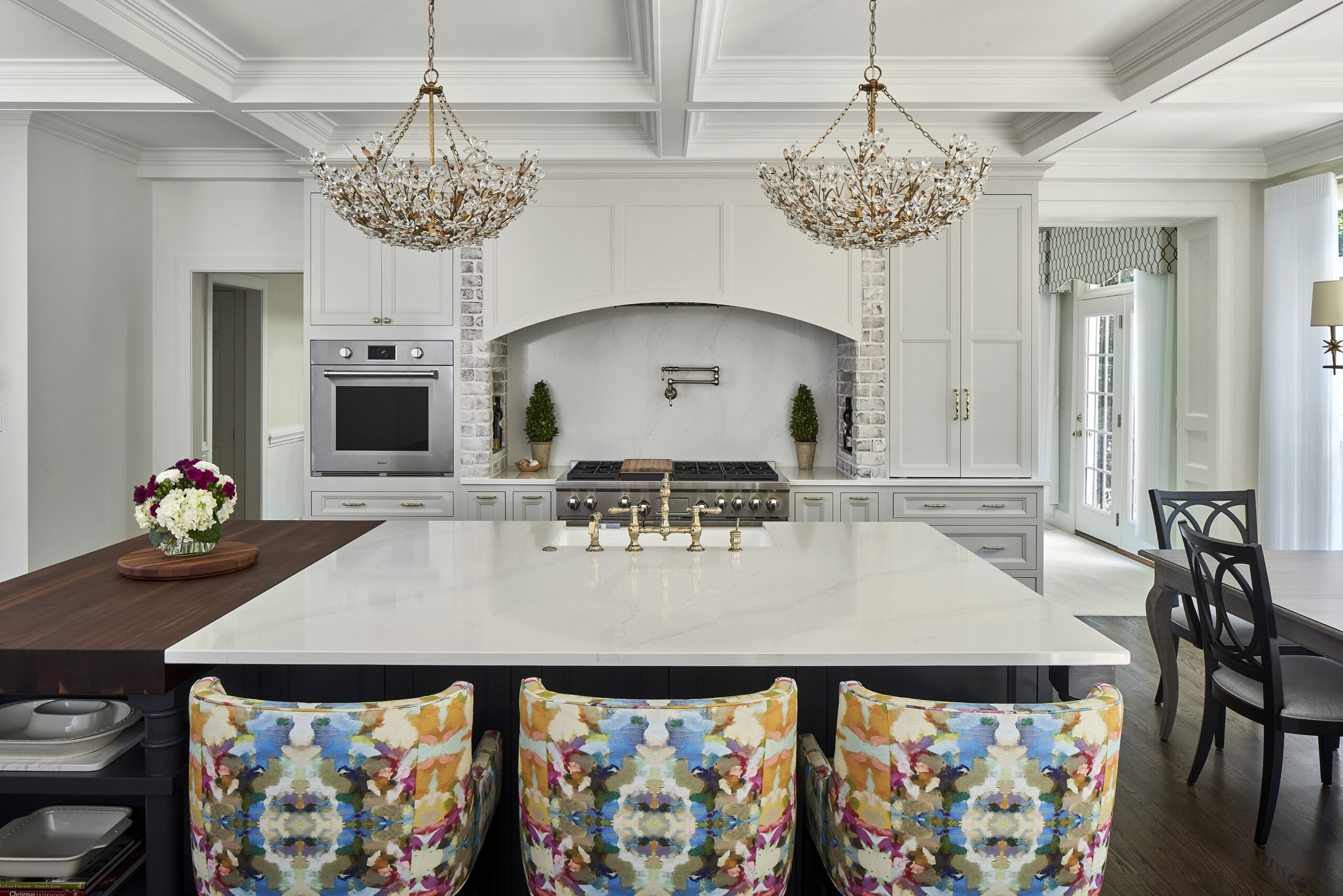
Kitchen countertop materials shape more than the work surface. They set the tone of the entire room, decide where your eye lands when you walk in, and determine how the kitchen will hold up over years of homework, dinner parties, holiday baking, and ordinary life. The materials world looks different in 2026 than it did even five years ago. Large format porcelain slabs the size of a wall, natural stones with movement that no engineered surface can copy, and a growing case for treating the wall itself as a design feature are all reshaping how we plan Charlotte kitchens. This guide walks through the materials we reach for, where each one lives best, and how to think about counters and walls as one connected surface system instead of two separate decisions.
The Complete Guide to Kitchen Countertop Materials
Counters, Backsplash, and Wall: Why They Belong in the Same Conversation
For a long time, the backsplash was an afterthought. Pick a counter, hang the cabinets, fill the in-between with a strip of tile, done. That model is fading. In a 2026 kitchen remodel, the wall behind the range is treated as a third design surface, not a leftover.
Sometimes it carries the same slab as the counter and runs straight up to the cabinets or all the way to the ceiling. Sometimes it switches material on purpose to give the room texture, color, or a hand-made warmth. Either way, it is planned at the same time as the countertop, with the same intention.
When counters and walls are designed together, the kitchen reads as one calm composition instead of three disconnected zones. For homes with open floor plans (common across Myers Park, Dilworth, SouthPark, and newer Fort Mill builds), that connected surface system is what makes the kitchen feel like part of the living space rather than a separate utility room.
The Major Kitchen Countertop Materials in 2026
There is no single best countertop material. There is a best material for a specific household, design direction, and how the kitchen will actually be used. Here are the ones we specify most often in Charlotte, with the trade-offs we walk through during the Design Studio phase.
Engineered Quartz
Engineered quartz remains the most-requested surface for high-use kitchens. It is non-porous, so it does not stain, never needs sealing, and holds its color over time. Today’s quartz patterns are dramatically more realistic than the granular slabs of a decade ago, thanks to ultra-fine particle technology and through-body coloring (the pattern goes all the way through the slab, not just across the surface). Best for: busy households, families with young children, and clients who want low-maintenance peace of mind. One caveat we share at selection time: quartz is heat-sensitive at high temperatures, so trivets stay a good habit.
Natural Quartzite
Quartzite is the 2026 favorite. The National Kitchen and Bath Association’s most recent trend report puts it ahead of every other surface for both countertops and full-height backsplashes in premium residential kitchens. It looks like marble, with the depth and luminosity that only natural stone gives you, and it holds up to daily cooking close to granite. We are specifying it almost everywhere right now, often in honed or leathered finishes to soften the glare and add a tactile quality. Best for: homeowners who want natural stone with daily-life resilience and visible movement.
Marble
Marble is still here, and it is still beautiful. The shift in 2026 is the finish: honed and leathered, not high-polish, because the matte surface hides etching and water marks while emphasizing the veining. We tell clients honestly that marble carbonates will react to wine, lemon, and tomato, and that the patina developed over years is part of the appeal. Some homeowners welcome a kitchen that ages with them; others do not. The conversation goes there during selections. Best for: design-led spaces, classic homes in Myers Park or Eagle Lake, and clients who like a surface with soul.
Large Format Porcelain (Dekton, Neolith, Laminam)
This is the category that has changed the most in the last five years. Large format porcelain slabs (Dekton from Cosentino, Neolith, Laminam, and others) come in single sheets that can exceed ten feet long, with patterns that mimic natural stone, concrete, terrazzo, and even oxidized metal. They are heat resistant, scratch resistant, UV stable for outdoor use, and lighter than the equivalent stone slab. They also let us run a single material from the countertop up the wall to the ceiling without a seam. Best for: contemporary kitchens, outdoor kitchen extensions, covered porches, and full-height feature walls.
Granite
Granite is having a quiet 2026 comeback in the right home. The leathered and honed finishes that brought quartzite forward are doing the same for granite, especially the darker, more varied slabs that read as natural rather than busy. We use it in transitional renovations and in mountain or lake retreats where a polished surface would feel out of place. Best for: traditional and transitional designs, and clients who want a genuinely natural surface with proven durability.
Soapstone, Concrete, and Specialty Surfaces
There is a smaller bench of materials we still reach for on specific projects. Soapstone is heat-proof in a way no other natural stone is, soft to the touch, and develops a deep patina over time. We can integrate sinks, drainboards, and curved edges. Custom solid surface materials handle complicated geometries with invisible seams. These are not the default, but for the right project they do something nothing else can. Best for: bespoke kitchens, period homes, and any project where a one-of-one moment matters.
Tile vs. Large Format Slab on the Wall
Tile and slab are not in competition. They do different things.
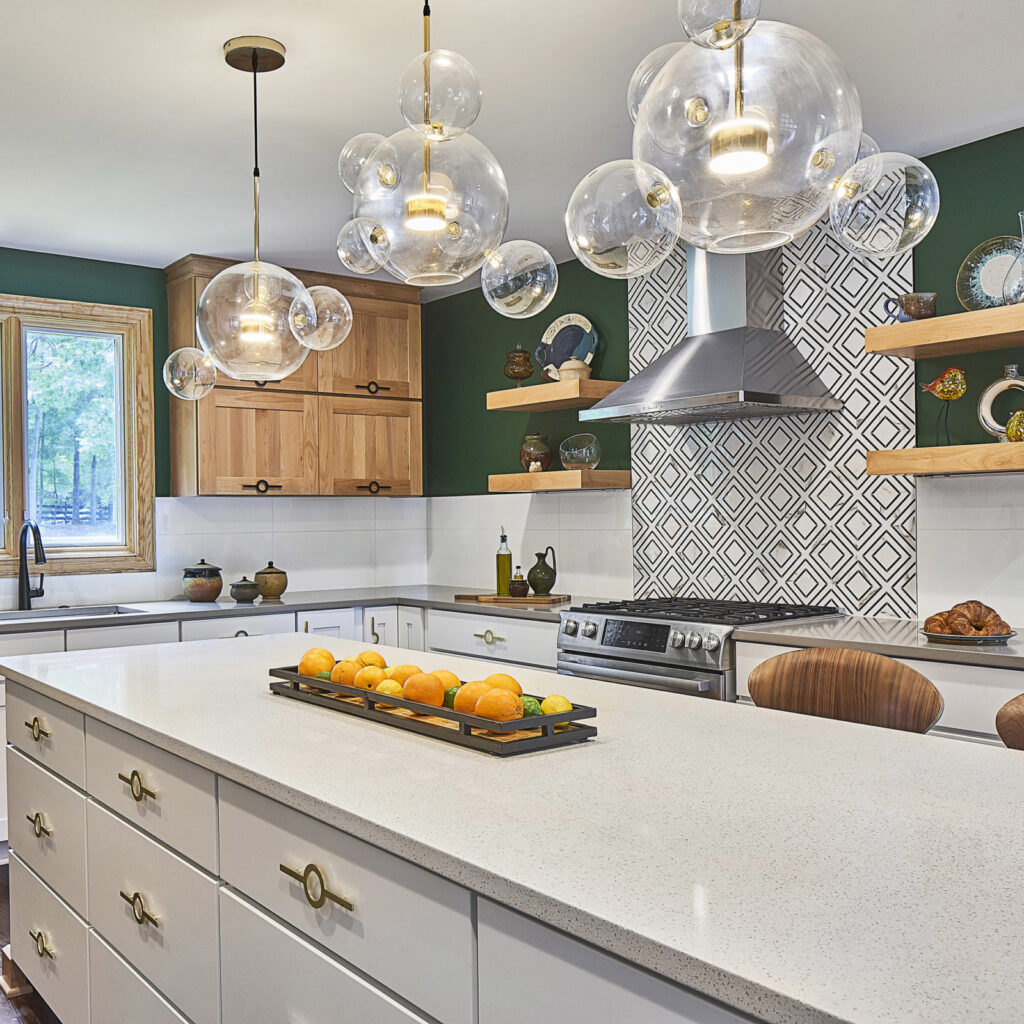
Tile (handmade zellige, classic subway, terracotta, hand-glazed ceramic, or a careful mosaic) gives a wall texture, dimension, and the hand of the maker. Grout lines become part of the design. You can feel that the surface was assembled, not poured. Tile suits warmer styles, Mediterranean leanings, and kitchens where the wall is meant to feel handcrafted rather than monolithic.
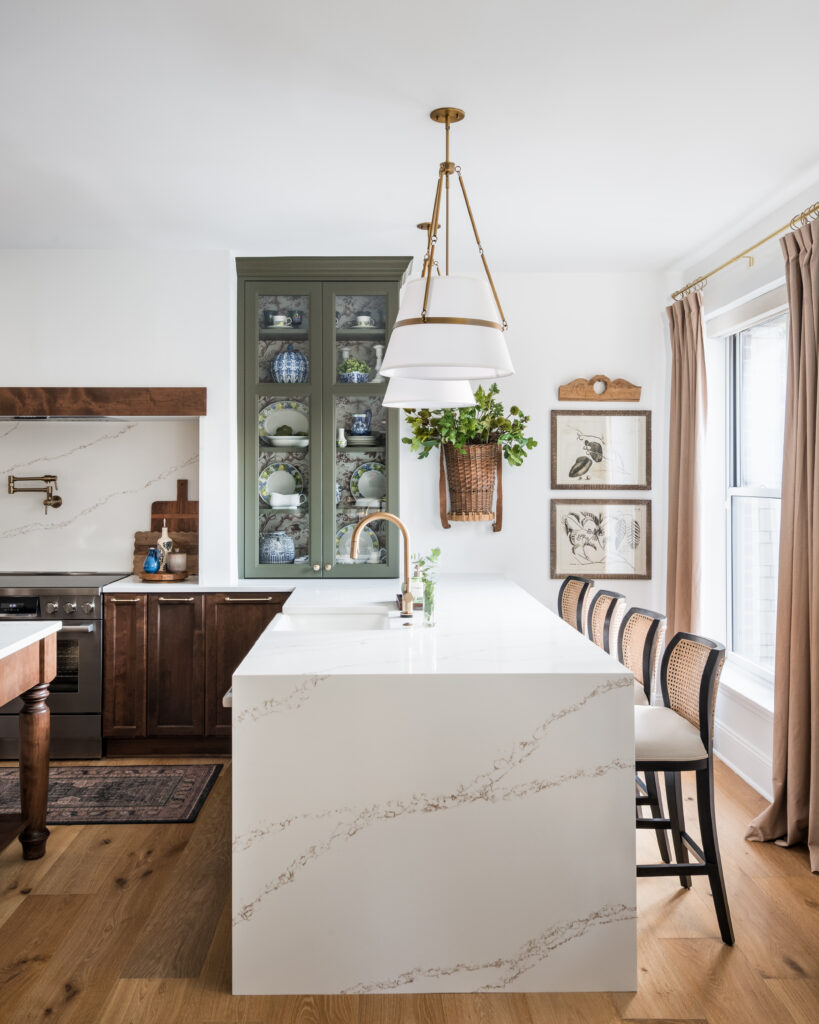
Slab gives a wall drama and quiet at the same time. A single piece of porcelain or stone running from counter to ceiling reads as architectural. There are no grout lines to clean, no patterns competing with the rest of the room. It is what people mean when they say a kitchen feels gallery-like.
Most of the Charlotte kitchens we design in 2026 use both. A slab statement wall behind the range, and a tile moment somewhere else in the room (a pantry, a coffee station, a bar) where texture is more important than continuity.
Wall as Feature, Wall as Workhorse, or Both?
The most useful question to ask early in a kitchen remodel is what each wall should do.
A feature wall is meant to be looked at. It carries the room. Typically it is the wall behind the range, or the wall facing the living space in an open plan. A full-height slab in dramatic quartzite, a hand glazed tile in a bold color, or a textured limestone panel all qualify. It is the moment you photograph.
A workhorse wall is meant to survive. Painted drywall over a strip of practical tile, a low-effort ceramic that wipes clean, a single color that reads quietly. Behind a coffee station or in a butler’s pantry, that is often the right call.
The third option is the one we use most: both. A leathered quartzite that reads as a clear design choice and shrugs off the inevitable splash. This is where design-build conversations spend the most time during the selections phase.
Pro tip: When in doubt, let the wall behind the range carry the room. It is the most-seen surface in any kitchen and the easiest place to make a single, confident material choice you will love for years.
What Shapes the Investment in Kitchen Surfaces
Every kitchen surface decision has factors that move the project up or down. None of them are dollar figures; they are the variables we walk through with clients during the Design phase, so the investment range we share, once we understand your space, reflects the actual project.
| Factor | Why It Matters |
| Material category | Natural stone slabs, large format porcelain, and engineered quartz fall in different ranges of fabrication and sourcing. |
| Slab yield | Bookmatching, vein matching, and waterfall returns all require additional slabs to keep the pattern continuous. |
| Surface area | More counter feet, an island, and a full-height backsplash each move the material order up. |
| Finish | Honed and leathered finishes can add fabrication steps compared to a standard polish. |
| Edge profile | Mitered, waterfall, and integrated drainboard edges add precision work and labor hours. |
| Site conditions | Older homes in Dilworth, Plaza Midwood, or Eagle Lake sometimes need cabinetry rebuilds or structural reinforcement before stone goes in. |
Instead of starting with a number, start with the outcome you want; the feel of the room, the level of maintenance you are willing to accept, and the way the space will be used. ReVision shares a transparent investment range once we understand your space and priorities.
2026 Material Trends Shaping Kitchen Surfaces
A handful of trends are doing real work in 2026, not just turning up on mood boards.
- Bold, expressive stone with dramatic veining replacing safe neutrals as the kitchen focal point.
- Honed and leathered finishes overtaking high polish, especially on quartzite and marble.
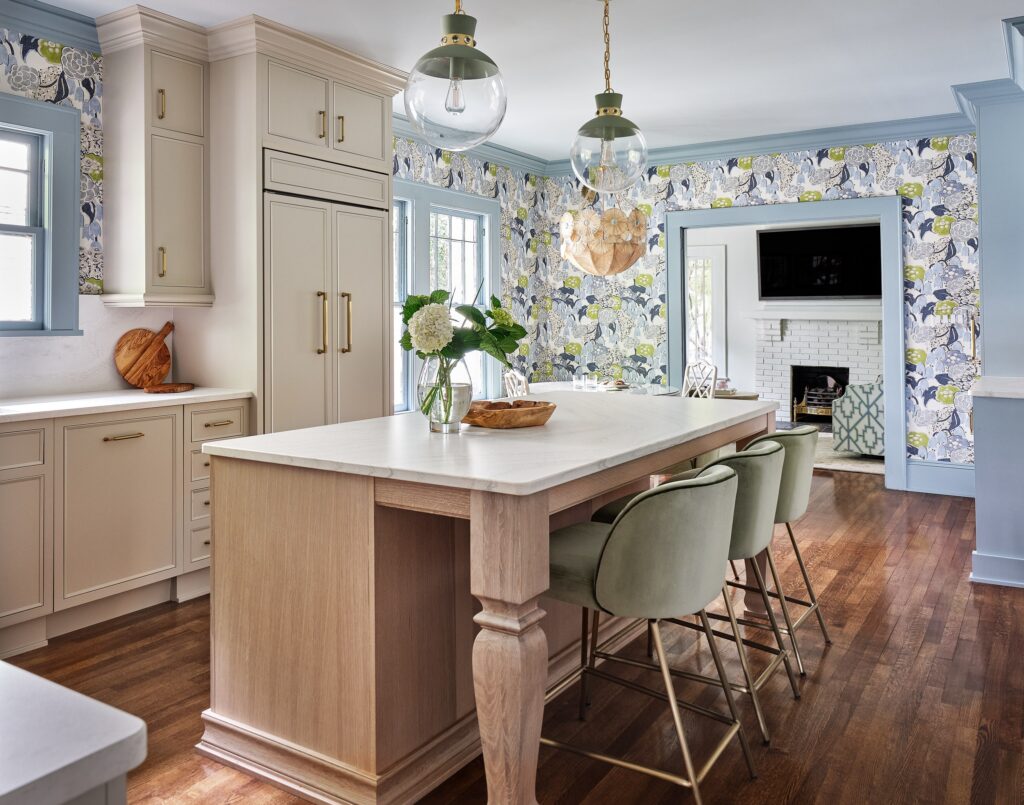
- Warmer tone palettes (creams, beiges, taupes, soft browns, muted greens) paired with stained wood cabinetry.
- Full-height slab backsplashes, often the same material as the counter, becoming the default for premium kitchens.
- Large format porcelain extending the kitchen surface into outdoor kitchens, fireplace surrounds, and accent walls elsewhere in the home.
- Whole-home material continuity, with the kitchen counter or feature wall reappearing in an adjacent bar, hearth, or bathroom for a calmer floor plan.
Use carefully: highly veined waterfalls in trend-driven colors can date quickly. The material is forever; the color story is the gamble. Choose a stone you will love when the palette of the moment has moved on.
Featured Surface Applications by Charlotte Neighborhood
Different neighborhoods, different homes, different right answers. A few patterns we see often in the ReVision portfolio:
Myers Park Traditional
A classical center-hall in Myers Park calls for a counter and wall that respect the architecture. Honed quartzite, paneled cabinetry, and a slab backsplash that runs to picture-rail height keep the kitchen feeling original to the home while still working hard in 2026.
SouthPark or Ballantyne Contemporary
For a contemporary home in SouthPark or Ballantyne with open sightlines to the living room, large format porcelain on the island and a single-slab full-height feature wall create the gallery effect homeowners ask for, with a maintenance profile a busy family can actually live with.
Explore Our Luxury Condo Remodels in CharlotteDilworth or Plaza Midwood Bungalow
A craftsman or bungalow in Dilworth or Plaza Midwood often benefits from a mixed-material approach. Soapstone or honed granite on the counter, hand-glazed ceramic tile on a feature wall, and warm wood cabinetry let the kitchen feel personal and rooted in the home’s period without becoming a costume.
Fort Mill or Carmel Forest New Build
Newer builds in Fort Mill or Carmel Forest are where we deploy the seamless slab look most often. A quartzite waterfall island, a slab-matched backsplash, and pared-back upper cabinets make the kitchen feel custom inside a home that started life as production.
How to Choose a Remodeler for a Surface-First Kitchen
Three questions separate firms who think carefully about materials from firms who treat them as line items.
- Can I see how you handle slab fabrication and material seams in a finished project? Look for clean miters, intentional vein matching, and minimal seam placement in high-visibility areas.
- Who is responsible for selecting, ordering, and templating the stone? In a design-build setup, that is one team with one point of contact for every step.
- How do you handle a change order if a slab arrives flawed or cracks in fabrication? Premium firms have a process and a relationship with the supplier; they do not push the problem onto the homeowner.
When all three answers point to a single team with a clear process, you have found the right partner. For a deeper look at what that experience feels like, read our recent piece on the premium remodeling Charlotte experience.
Frequently Asked Questions
| Question | Answer |
| What is the best countertop material for a busy kitchen? | For most busy households, engineered quartz remains the easiest answer. It does not need sealing, holds up to daily life, and comes in patterns that read as natural stone. If you want the look of marble or quartzite without the same level of maintenance, large format porcelain is the next material to consider. |
| Is quartzite better than quartz? | They are different materials. Quartzite is natural stone, cut from the earth, with movement and depth no manufacturer can replicate. Engineered quartz is a manufactured product, designed for consistency and low maintenance. Quartzite is more popular in 2026 design-build kitchens, but the right choice depends on how much variability you want and how much periodic sealing you are willing to do. |
| Is a full-height slab backsplash worth it? | For many premium kitchens in Charlotte, yes. It eliminates grout, gives the room a clean architectural moment, and lets the counter material continue up the wall for a unified look. It does require more slab yardage and a fabricator comfortable with template precision, which is where a design-build firm earns its keep. |
| How do I keep marble looking good in a kitchen? | A honed or leathered finish helps. Daily wipe-downs, sealing on the schedule your fabricator recommends, and accepting that marble will develop a patina over time are the keys. If you want zero patina ever, marble is probably not the right material. |
| Can large format porcelain be used outdoors? | Yes. Most large format porcelain slabs (Dekton, Neolith, Laminam) are UV stable and freeze-thaw rated. We use them for covered porches, summer kitchens, and outdoor bars, which is one reason they are growing in popularity in Charlotte’s climate. |
| Do I need to use the same material for counters and the backsplash? | No, but it is becoming the more common premium choice in 2026. Matching the counter and the backsplash gives a calmer, more contemporary look. Mixing materials (a slab counter with a tile feature wall) keeps the room warmer and more eclectic. Both can be done well; it depends on the architecture and how you want the room to feel. |
| Should the wall be a feature or stay functional? | It can be both. The most successful kitchens we design pick one wall (often behind the range) to carry the room visually, and let other walls stay quietly functional. Trying to make every wall a feature creates visual noise and shortens how long you love the room. |
Ready to Start?
Choosing kitchen countertop materials is more rewarding when it is part of a designed conversation, not a quick trip to a slab yard. The team at ReVision walks Charlotte homeowners through every surface decision, from the slab on the island to the wall behind the range, with selections shaped by how you actually live.
Start a conversation